01 · RecognitionLooking directly at it, still unable to see it
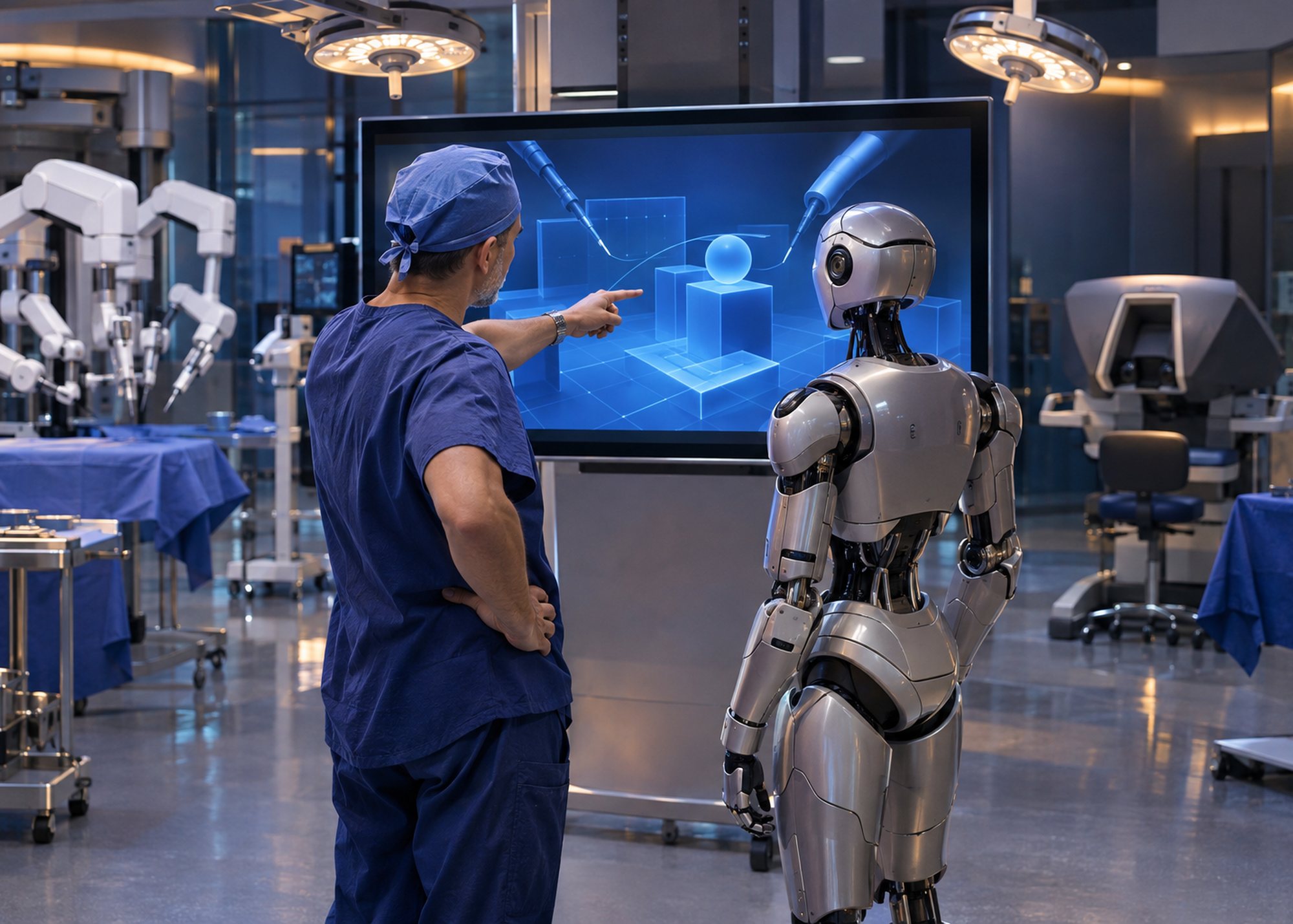
During more than twenty years of teaching residents and fellows, it was not uncommon to point at something in surgery, and the surgeon I was teaching still could not recognize what it was. They might know its name and where it belonged in an anatomy textbook. Yet there it was in front of them and they could not make it out clearly. Disease or trauma had obscured, displaced, or partly hidden the anatomy. We were looking at the same patient with very different understanding.
I think of those moments when I hear how robots are expected to learn surgery. A discussion on the Moonshots podcast captures the promise of robots sharing surgical experience across thousands or millions of cases:
“So the surgeon who’s seen the most varied cases is most likely to be the most successful. And when you’ve got federated learning across all robots, they’ve seen millions of cases and they share all those memories.”
Moonshots with Peter Diamandis, Episode 303
I think the shared-cases argument oversimplifies the path to surgical mastery. The cases exist. More than 3.1 million operations were performed on da Vinci systems in 2025. Seeing a case is not the same as understanding it. In an earlier essay, I wrote that a recording shows what happened, but often not why the surgeon slowed down or abandoned the plan. The quotation leaves the teaching behind those cases unexplained. I am skeptical of how quickly access to millions of operations is expected to become dependable judgment. Experience changes what we recognize and what we do next. How will a robot acquire that understanding?
02 · Expert judgmentThe decisions behind small movements
Watching an expert colleague perform a difficult robotic dissection reminded me how much judgment can disappear into a small movement. He returned to the same area repeatedly, doing what might have seemed pointless to a novice. I recognized familiar choices about when to persist and when to change approach. In this case, being an observer gave me time to reflect on decisions I usually make while operating myself. He was spending time setting up his future moves.
It’s like watching an incredibly complex game of three-dimensional billiards where the master surgeon never seems to have a difficult shot. That is the point: the difficulty was solved three moves earlier, in decisions the novice never noticed.
Now consider what a recording of that operation shows. The difficult shot never appears, because he avoided it. The moves that prevented it look like nothing. To a viewer who does not already understand them, a master surgeon’s hardest case can look like an easy one.
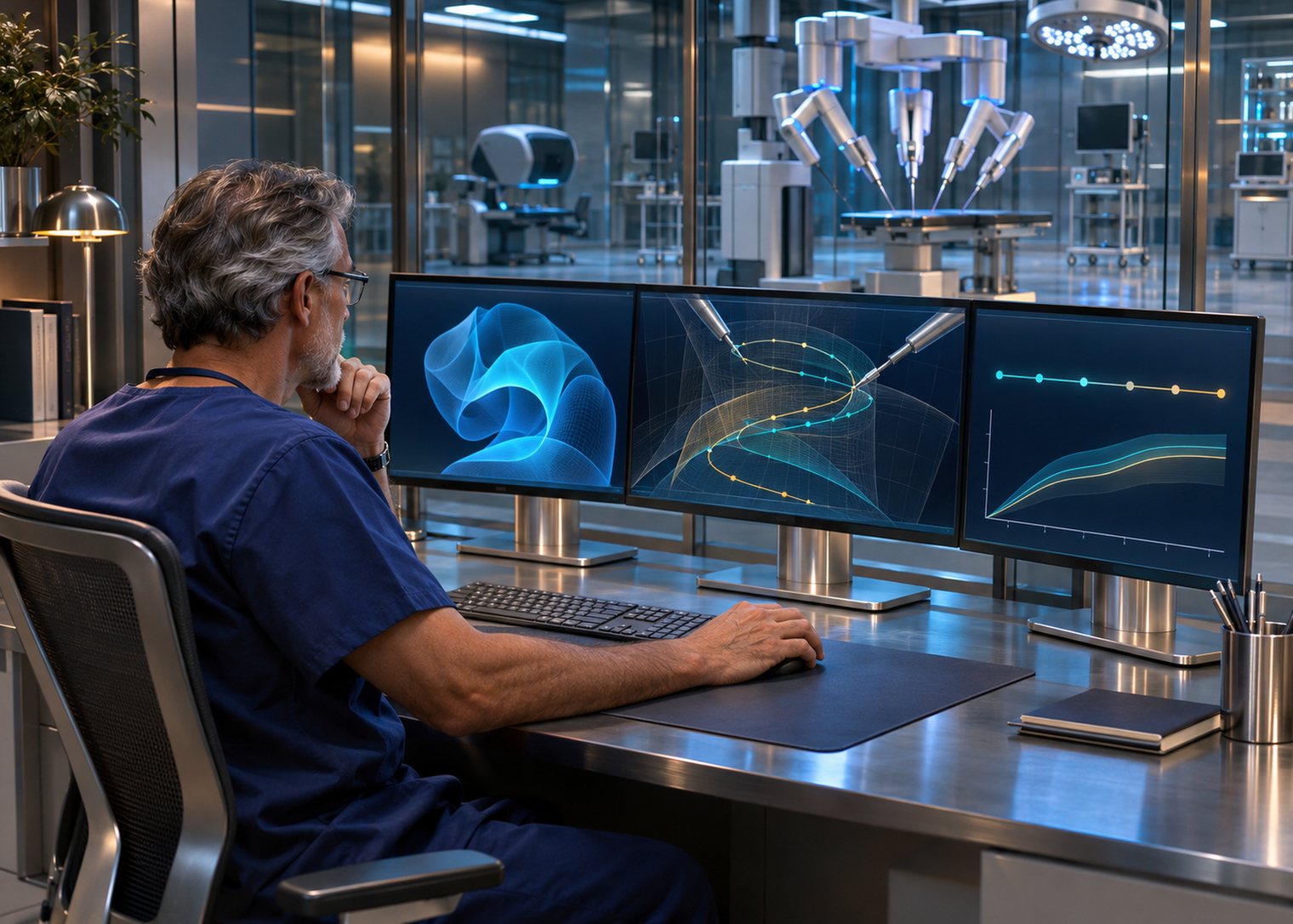
A tissue plane is a boundary we use to separate structures while protecting what needs to remain intact. Disease can obscure it. Decades of surgical practice and reflection help me recognize a slight change in tension or movement that may suggest where the best plane is or what lies beneath the surface. Releasing nearby tissue can make an earlier approach workable. What may seem like lack of progress has to be understood in the context of the whole field, including structures outside the camera’s view.
The choice of whose work teaches a robot matters. In my experience, competence can sit a considerable distance below mastery. Most recorded operations will come from competent surgeons, because that is where most surgeons are. A competent surgeon can work through difficulties during surgery safely. However, an expert anticipates them and often makes a difficult operation look easy. Deep expertise takes constant practice to maintain, and it is often concentrated in a narrow specialty. Cases from competent surgeons and high-volume experts could show a range of techniques, judgments, complications, and corrections. Expert review would help distinguish what to emulate from what to correct.
03 · MentorshipTeaching while the operation unfolds
Volume gives us opportunities to learn. In human training, volume alone does not convey knowledge or surgical competence. We would never propose that humans learn the craft of surgery purely by reading textbooks and watching videos. Mentorship explains the boundaries, subtleties, and techniques. Repeating a maneuver without useful correction can reinforce the same error. Deliberate reflection helps turn those opportunities into better judgment.
The teaching begins during the operation. When I taught residents and fellows, I watched the learner and the tissue, encouraged productive persistence, suggested a change, or took over. The trainee received guidance while making decisions and seeing how the tissue responded. I encouraged them to record the surgery and replay the recording the next day. They could then evaluate their performance and see the subtleties as an observer with the benefit of hindsight. They could reflect on what went right, what went wrong, and why a correction mattered. The video reinforced an experience they had already lived with a mentor.
How does a robot receive the equivalent teaching? Researchers have begun to try. In 2025, a team at Johns Hopkins reported a robot that completed one step of a gallbladder removal, the clipping and cutting, on eight pig gallbladders outside the body without human intervention. It learned from recordings of surgeons performing the procedure, with captions describing each task. It also responded to spoken corrections from the team and learned from them. The university compared it to “a novice surgeon working with a mentor.” That is one step of one operation, in a laboratory. It is also a robot that was taught, not simply shown.
Captions that name each task are a start. The judgment I have been describing asks for more. We could connect a surgeon’s explanation or correction to the moment it occurred in the recording. A training record could label the visible cue, the action taken, and the mentor’s correction: for example, a change in tissue tension, a repeated maneuver, and guidance to release nearby tissue. Preparing these records would require substantial post-processing work or surgeons narrating while operating. An explanation recorded before a movement captures what the surgeon expected to happen, before hindsight changes the story. During review, we could pause before the next movement, ask the AI model what it expects, and have an expert assess its proposed action. That would give us something specific to examine: whether it recognized the concern and how it responded to guidance. Teaching these subtleties will take tremendous human effort. It’s going to take dedication from surgeons who are already overwhelmed teaching young doctors the craft.
A machine may also learn some patterns from sheer video scale that surgeons find difficult to explain. Comparing predictions with what happens next could reveal relationships across more cases than any of us will see. I’ll admit that is a real possibility. How well or how quickly a robot can learn surgical judgment will have to be determined prospectively. For now, we cannot outsource surgical judgment. Explicit teaching could help us discover and correct gaps sooner, even if machines ultimately learn differently from people.
04 · The limits of volumeWhat millions of cases can still miss
A large collection of straightforward operations may offer few examples of a rare, difficult combination of disease and prior surgery. Breadth matters within each procedure. Thousands of cases may still leave a robot unprepared for a technique or unusual anatomy they never show. Transfer from other operations might help, but that benefit needs testing.
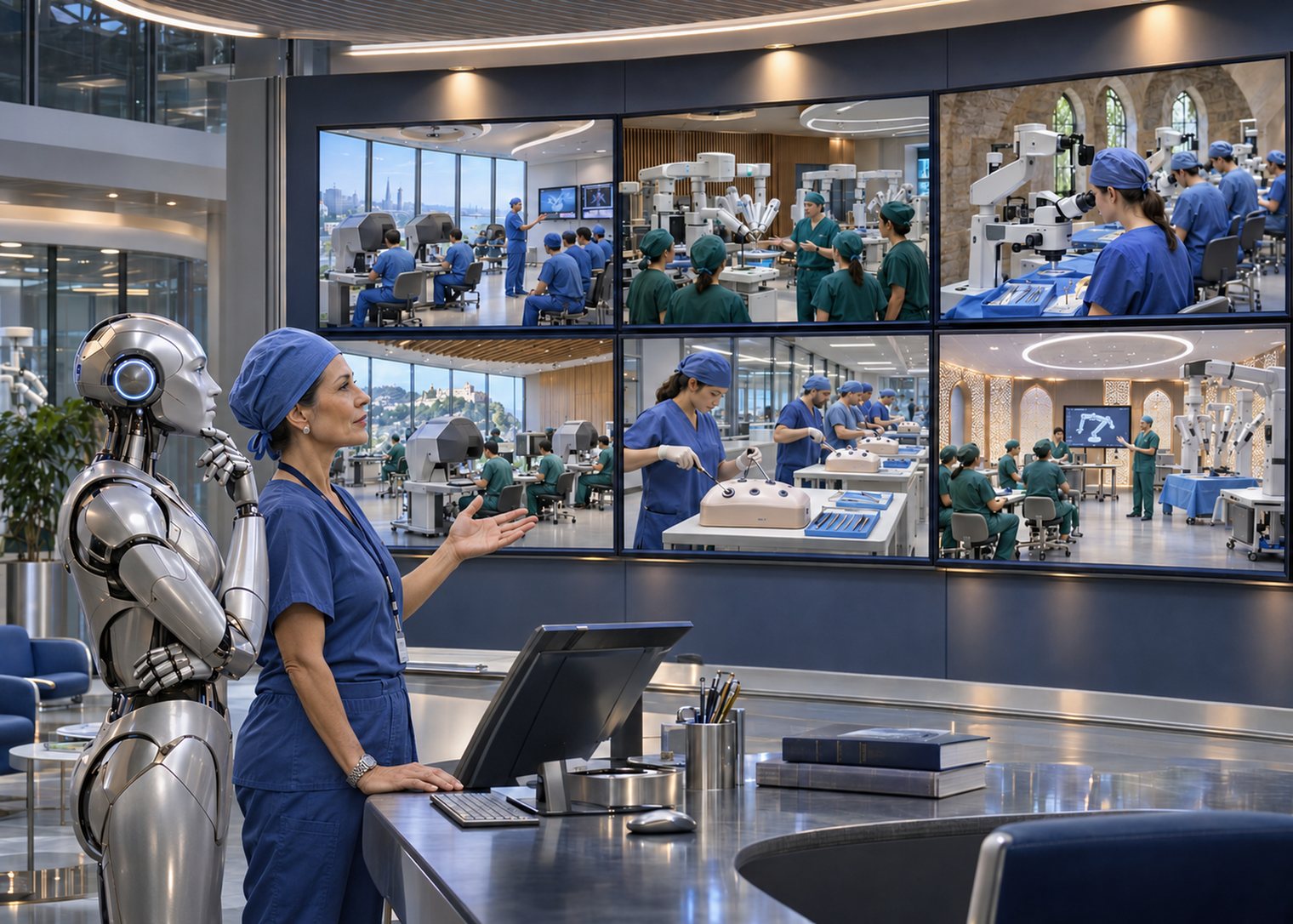
Even a recorded case takes work to become a useful lesson. The view must be usable, the teaching and corrections connected to the relevant actions, and the record accessible with appropriate permissions and protections. Sharing records and linking them to later outcomes would require agreements across institutions and compliance with the rules in each jurisdiction. Federated learning, the method named in the quotation, is meant to ease that burden: each hospital keeps its records, and only what the model learned from them is shared. It cannot share teaching that was never recorded. Recovery adds information later. Linking an operative choice to what happens to the patient weeks or months afterward is another part of learning from experience that is only beginning to be incorporated into data captured in the operating room.
05 · Supervised practiceWhen the robot takes the instruments
Then the robot has to act. Its own movements create the tissue conditions it must interpret next, including conditions unfamiliar from its training. Simulation and laboratory practice could help test its response before carefully evaluated, supervised clinical performance. I would want to see it reassess, change course, or seek help as the situation unfolds. A supervisor must recognize danger and take control quickly enough to protect the patient. Corrections and takeovers belong in the assessment alongside outcomes. Shared updates need testing too, including whether earlier skills remain dependable.
These studies take time. That is why I remain skeptical of a near-term takeover across surgery. Longer term, I am optimistic about a machine learning from surgeons across hospitals and generations. I would welcome the chance to give more patients the benefit of that experience. I want its builders to show how those shared cases teach a robot to recognize the anatomy in front of it and choose wisely when the tissue responds differently than expected.
Maybe I just don’t know enough about how AIs can learn. I do know how surgeons learn. Someone stands beside them for years and points at what they cannot yet see. Someone will have to do that for the robot.
A little teaching went into this essay, too. I dictated the first draft to Vera, my AI assistant, who helped me edit it. When her edits missed what I meant, I explained why, the way I would with a resident. I take responsibility for every word.