Advanced Surgical
Management of
Complex Fibroids
Moving beyond "watch and wait." Minimally invasive surgical planning for large, multiple, and difficult-to-access uterine fibroids — led by a dual-fellowship trained MIGS surgeon.
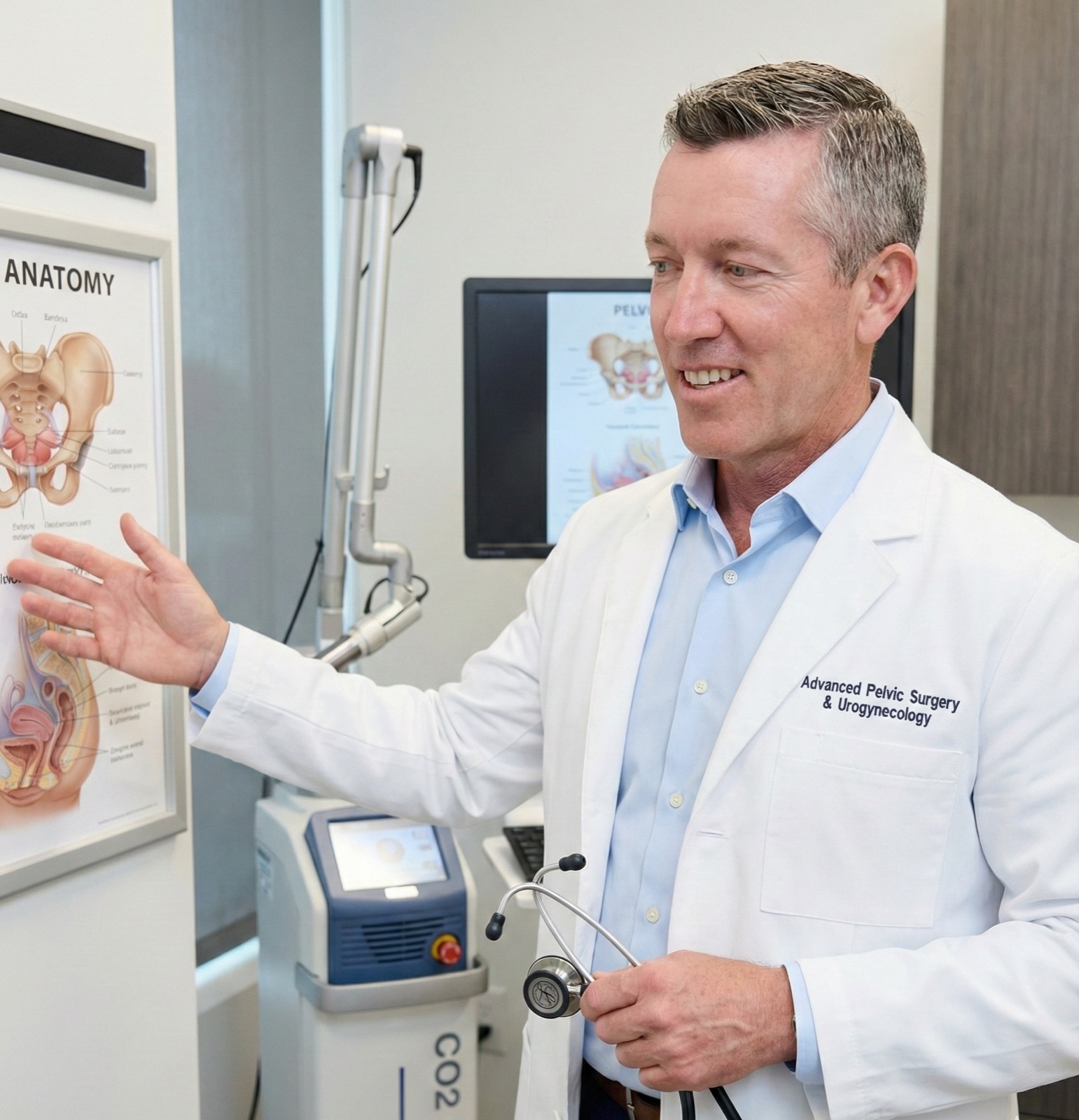
The Biological Reality of Complex Fibroids
Fibroids are non-cancerous (benign) muscular tumors that develop within the walls of the uterus. They are incredibly common — affecting up to 80% of women by age 50 — and represent the leading indication for gynecologic surgery in the United States.
Clinical Validation: Complex fibroids are driven by intrinsic genetic and hormonal factors. They are not caused by your diet, stress, or lifestyle choices. You did not cause this.
Fibroids typically present with distinct borders. However, because they form dense, fibrotic knots that intertwine with healthy uterine muscle and blood supply, they do not completely shrink or disappear on their own — even after menopause. They require highly precise architectural dismantling by an expert surgeon.
Fibroid Types Dr. Stepp Treats
Oncological Distinction: Fibroids are strictly benign. Very rarely, a distinct malignancy known as leiomyosarcoma can mimic a fibroid (estimated risk: 0.02% to 0.13%). While no imaging can definitively diagnose this preoperatively, our specialized extraction protocols are meticulously designed to safely manage this remote possibility while preserving the benefits of minimally invasive surgery.
Strategic MRI Mapping
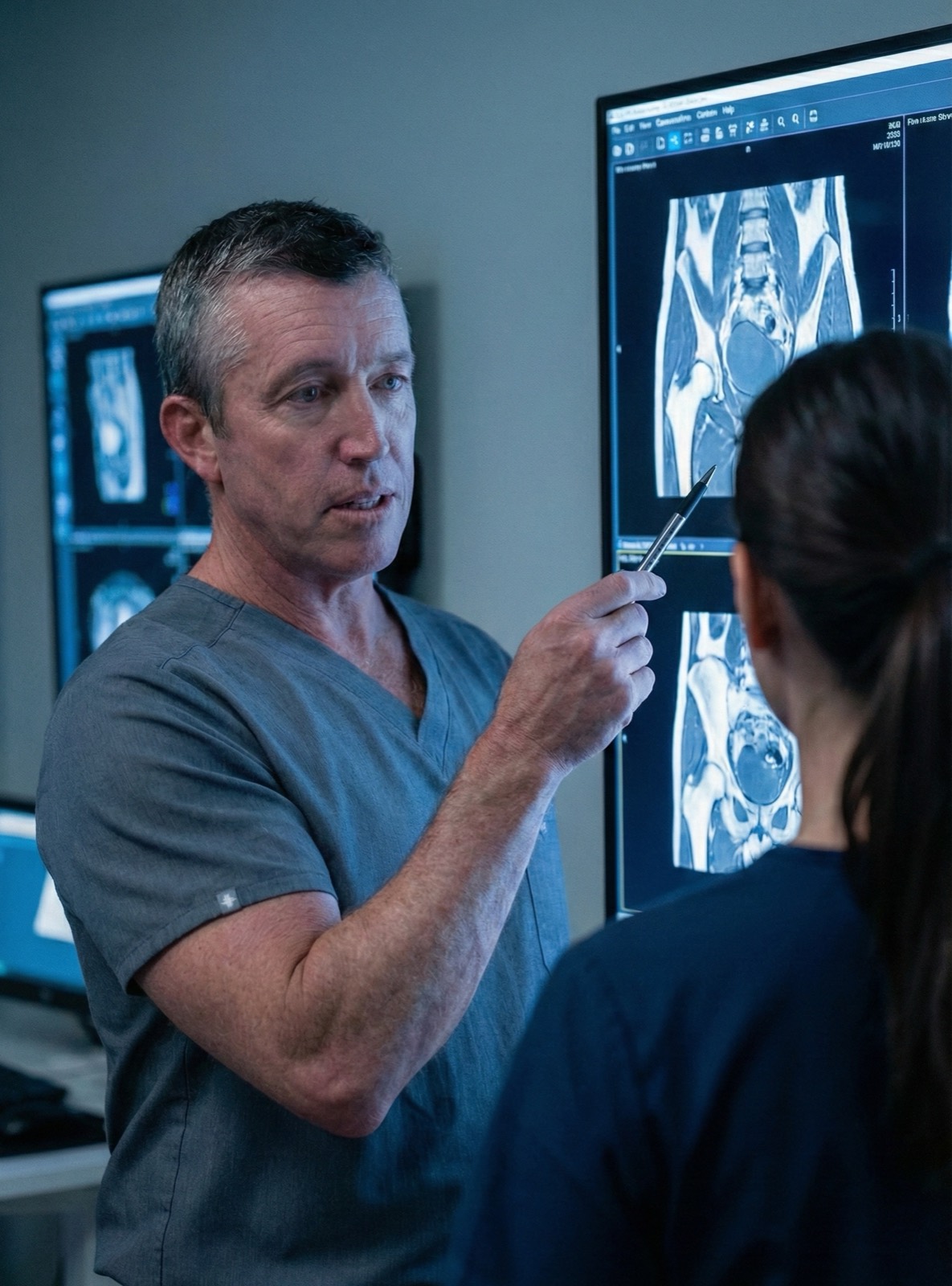
Dr. Stepp uses detailed preoperative pelvic MRIs, bringing these advanced images directly into the operating room. This allows strategic mapping of each fibroid's location, size, and relationship to surrounding anatomy so the surgical plan is not based on guesswork.
Fibroids vs. Adenomyosis
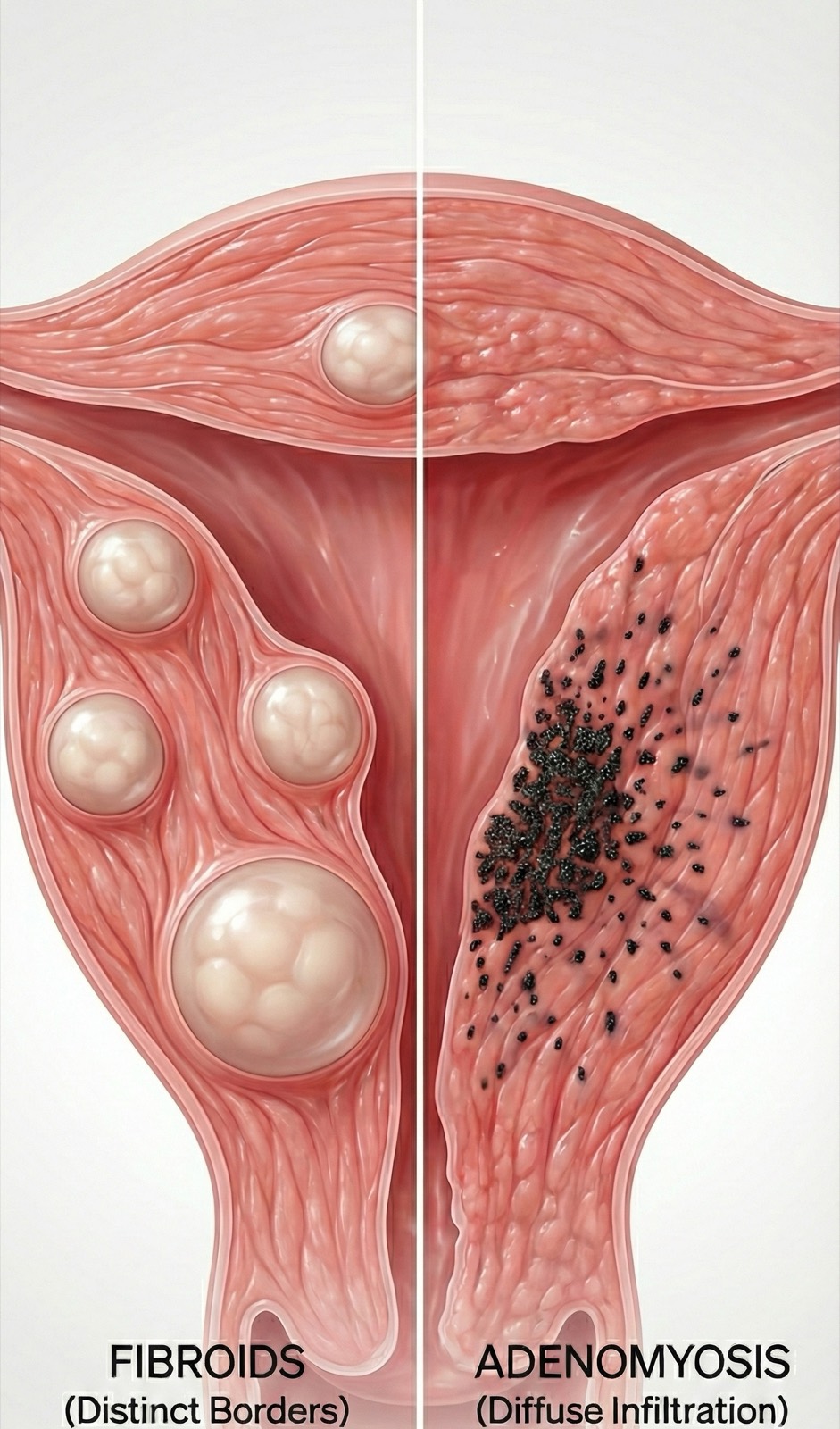
Unlike fibroids — which have distinct, surgically addressable borders — adenomyosis involves diffuse infiltration of the uterine muscle. Dr. Stepp is expert in diagnosing and treating both conditions, which frequently coexist. Accurate differentiation is essential to selecting the right surgical strategy.
The Menopause Myth
"Just wait for menopause" is outdated, harmful advice.
The Perimenopausal Surge
Hormonal volatility in the years directly preceding menopause creates estrogen dominance. This often accelerates fibroid growth precisely when patients were told relief was coming.
The Persistence Phase
Fibroids rely on peripheral estrogen produced in body tissue, meaning large fibroids can maintain their size and stiffness for 5 to 10 years well into post-menopause.
The Symptom Lag
While bleeding may stop after menopause, bulk symptoms persist. The stiff collagen structure continues to press on the bladder, bowel, and pelvic nerves indefinitely.
A Specialized Standard of Care
Some doctors manage symptoms with pills. We deliver expert, outpatient minimally invasive surgery.
Outpatient by Design. Less Than 1% Conversion Rate.
Complex fibroid surgery relies on selecting the least invasive tool that still matches the patient's anatomy. Dr. Stepp offers conventional laparoscopy, mini-laparotomy, and robotic-assisted surgery, then chooses the approach that best fits the case.
Our surgical protocols are rigorously designed for outpatient recovery. Overnight observation is exceedingly rare and reserved only for complex medical necessity. Dr. Stepp maintains a less than 1% lifetime conversion rate — meaning if a surgery begins minimally invasively, it is almost never converted to open abdominal surgery mid-operation.
Acessa® Radiofrequency Ablation
For patients seeking to preserve their uterus with minimal incisions, Dr. Stepp utilizes Acessa radiofrequency ablation. By applying targeted energy directly to fibroid tissue through small laparoscopic ports, we significantly reduce fibroid size and relieve bulk symptoms. This outpatient procedure preserves the uterus and requires minimal recovery time.
Minimally Invasive Myomectomy
Utilizing advanced precision technique and strategic MRI mapping, Dr. Stepp dismantles the stiff fibroid matrix while meticulously suturing and reconstructing the healthy uterine wall. This approach removes fibroids completely while preserving the uterus for patients who wish to maintain fertility or uterine integrity.
The Fertility Collaborative: Dr. Stepp collaborates seamlessly with regional and national fertility specialists. As your architectural surgeon, he reconstructs the uterus to optimize it for a successful pregnancy — a step general gynecologists frequently overlook.
Robotic-Assisted Myomectomy
For large, deeply embedded, or anatomically complex fibroids, robotic-assisted surgery provides advanced three-dimensional visualization and instrument precision. Dr. Stepp uses the da Vinci surgical system to navigate complex pelvic anatomy with a level of dexterity that exceeds conventional laparoscopy — without the recovery burden of open surgery.
Minimally Invasive Hysterectomy
For patients whose symptoms, anatomy, or goals support uterine removal, Dr. Stepp performs minimally invasive hysterectomy with careful attention to pelvic floor architecture, ovarian function, and hormonal health. This is not simply fibroid removal; it is pelvic surgery planned around the whole anatomy.
Bloodless Surgery. Your Convictions. Fully Respected.
Dr. Stepp has operated on Jehovah's Witness patients for over 25 years and is listed with the Jehovah's Witnesses' Hospital Liaison Committee (HLC) as a surgeon willing to perform surgery in accordance with patients' convictions regarding blood. He deeply respects the sincerely held beliefs of every patient in his care.
Because Dr. Stepp's procedures are minimally invasive by design, blood loss is inherently low. Our surgical approach — laparoscopic and robotic technique, precise MRI mapping, and meticulous tissue handling — means that the vast majority of cases can be completed safely and comfortably without the need for transfusion.
If you are a Jehovah's Witness seeking a surgeon in Charlotte, NC who will honor your convictions, please contact our office directly. We are happy to coordinate with your Hospital Liaison Committee and discuss your case confidentially. (980) 771-0726
The Concierge Surgical Model
Dr. Stepp practices out-of-network so he can allocate the time complex fibroid cases require — both in consultation and in the operating room — and provide direct, continuous postoperative access.
Expedited Access
We bypass typical hospital wait times. Priority scheduling for surgery is standard for our patients. Complex cases do not sit in a queue.
Direct Surgeon Access
You communicate directly with Dr. Stepp — not a call center. All surgical patients receive his personal cell phone number for post-operative care.
Unrestricted Consultation Time
Consultations are comprehensive. We take the time necessary to review your MRI, understand your anatomy, and align on the right surgical strategy before any intervention.
Regenerative Surgical Support
Recovery planning may include evidence-based pain control, early mobility, nutrition guidance, and individualized supportive care coordinated around the operation.
Because Dr. Stepp is out-of-network, payment is due at the time of service. We provide superbill documentation for potential out-of-network reimbursement. There are no monthly or yearly membership fees — you pay for the surgical expertise and dedicated time you receive.
Schedule a ConsultationDr. Stepp accepts complex fibroid referrals from Charlotte, the Carolinas, and nationally. Travel Concierge support is available for out-of-state patients.