Endometriosis Excision
in Charlotte, NC
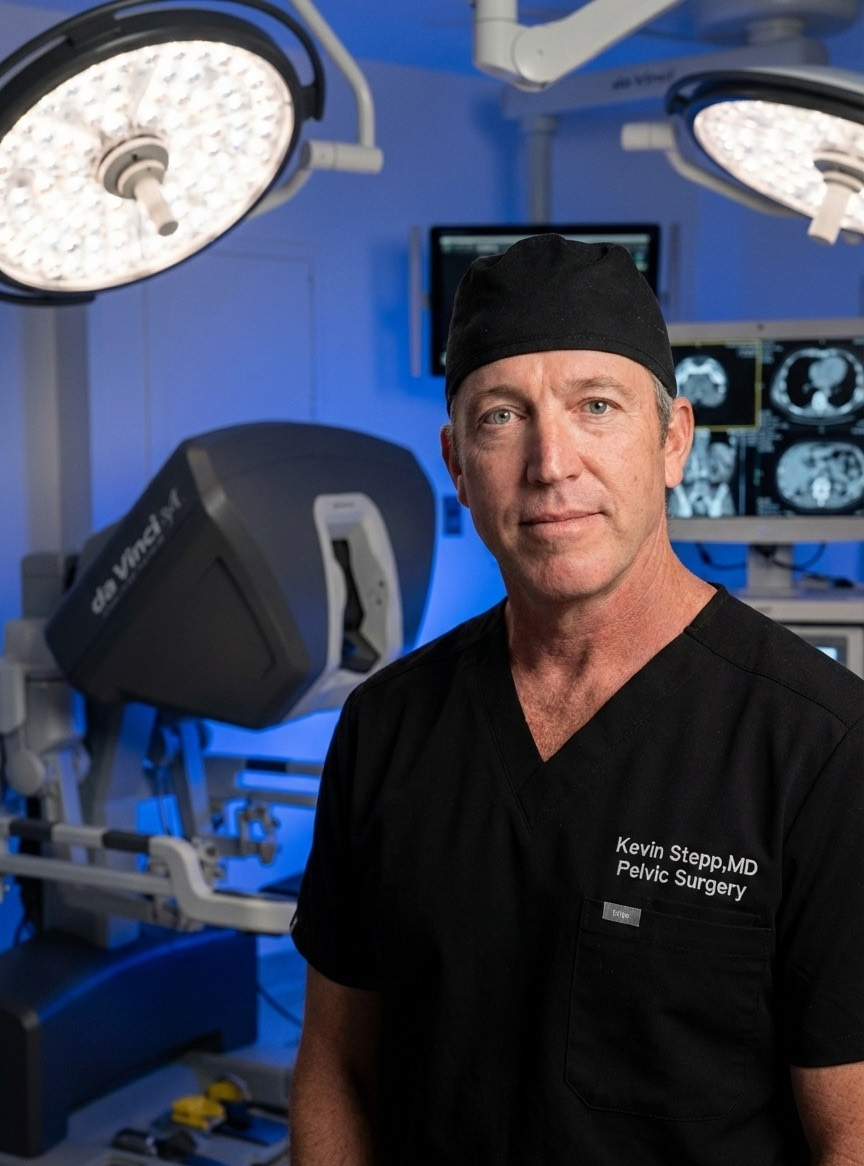
Endometriosis is not just painful periods. It can involve the bowel, bladder, ureter, ovaries, pelvic floor, and deep pelvic nerves. Many patients arrive here after years of symptoms, normal imaging, or treatment that never explained what was happening. Dr. Kevin Stepp evaluates endometriosis as an anatomic disease: where it is, what structures are involved, and whether nerve-sparing excision can remove it while preserving pelvic function.
Symptoms That Point to More Than "Bad Periods"
"Endometriosis is often dismissed as 'just cramps.' It is a whole-body inflammatory condition that can affect the bowel, bladder, nerves, and daily function."
Dysmenorrhea
Not just "bad cramps," but cyclic pain often resistant to NSAIDs, indicating potential adenomyosis overlap. This type of pain signals deep structural disease, not a hormonal inconvenience.
Dyspareunia
Deep pelvic pain during intimacy, often linked to lesions in the posterior cul-de-sac or uterosacral ligaments. Frequently one of the earliest and most diagnostic symptoms of infiltrating disease.
Dyschezia
Pain during digestion and bowel movements, strongly suggesting deep infiltrating endometriosis (DIE) on the bowel or rectovaginal septum. This finding is easy to miss on a routine evaluation.
Chronic Fatigue & Brain Fog
Nociplastic pain — where chronic inflammation rewires the central nervous system — causes severe fatigue in up to 50% of patients. Many patients are told this is stress or anxiety before anyone connects it to the disease.
Infertility
Affecting approximately 26% of patients, often due to tubal distortion, ovarian endometrioma formation, or chronic inflammatory environments that compromise egg quality and implantation.
How Dr. Stepp Evaluates Endometriosis
"Before I recommend surgery, I want to answer three questions. The answers determine the imaging, the surgical plan, and whether another specialist needs to be involved."
1. Where may the disease be located?
Your history and symptoms are important. Together with prior operative reports and available imaging, they help show where endometriosis may be located.
2. Which organs or structures may be involved?
Endometriosis may involve the ovaries, pelvic floor, bowel, bladder, ureters, or deep pelvic nerves. Knowing which structures may be affected before surgery helps ensure that the right surgeon or surgeons and the necessary tools are in the operating room.
3. What needs to be protected?
The priorities may include relieving pelvic pain, protecting sexual function, preserving ovarian reserve and fertility, and maintaining bladder and bowel function. The surgical approach is shaped around what matters most to each patient.
Why You Have It: Beyond "Backward Bleeding"
"Retrograde menstruation may explain some superficial lesions. It does not explain deep, infiltrative disease. If your symptoms and imaging do not match, the next step is a better anatomic evaluation."
Beyond Retrograde Menstruation
For decades, women were told their pain was simply "backward bleeding." While our understanding of endometriosis continues to evolve, severe and extrapelvic disease can be driven by far more complex mechanisms. Timely, nerve-sparing excision may help limit progressive anatomical distortion and neurovascular injury in appropriately selected cases.
The Cellular Reality
Current research suggests deep endometriosis may originate from circulating stem cells or bone marrow-derived progenitor cells. Emerging data points to acquired cellular changes that allow rogue cells to invade surrounding tissue, generate their own blood supply, and evade the immune system — behaving more like an invasive inflammatory process than a simple surface implant.
The Surgical Implication
Because deep endometriosis invades below the surface, treating the surface is not enough. We perform nerve-sparing excision — removing the lesion and the tissue it involves, while protecting the nerves that control bladder, bowel, and sexual function.
Excision, Not Surface Treatment
Ablation treats the surface. Excision removes the lesion and the tissue involved by the disease. For deep disease, that distinction matters.
Complex Pelvic Surgery
A "Normal" Ultrasound Does Not Rule Out Endometriosis
"Standard imaging can miss superficial disease. A careful diagnosis often requires expert physical evaluation combined with advanced specialized imaging — not a single scan at a general imaging center."
Specialized Pelvic MRI Mapping
When indicated, we utilize specialized pelvic MRI protocols for complex mapping of extrapelvic or deep disease — including involvement of the bowel, bladder, rectovaginal septum, and deep pelvic nerves such as the sciatic and hypogastric nerves. The surgical plan is built around this map: what organs and structures are involved, what needs to be separated, and what needs to be protected.
Nociplastic Pain & Central Sensitization
"Some patients continue to hurt after technically good surgery. That does not mean the pain is imaginary. Chronic pelvic pain can change how the nervous system processes pain signals — and that requires its own treatment."
Central Sensitization
Chronic pain can rewire the brain and spinal cord, creating Nociplastic Pain — where the volume of pain remains turned up even after the physical driver (the endometriosis lesion) is surgically removed. This is a recognized neurological condition, not a psychological one. It explains why many patients who have had excellent excision surgery continue to experience significant pelvic pain.
A Personalized Restorative Protocol
When this pattern is present, surgery is only one part of treatment. We design the recovery plan and coordinate with specialized providers to address the full-body response to disease:
-
Recovery Support: When appropriate, APSU coordinates pelvic floor therapy, pain-management care, and other evidence-based recovery measures. These supports do not replace complete excision or treatment of other pain generators.
-
Pelvic Floor Physical Therapy: Coordinated care with specialized physical therapists to physically release hypertonic, "guarding" pelvic floor muscles that frequently perpetuate pain long after the lesions are removed.
-
Neural Down-Regulation: Trusted referrals for targeted therapies designed to calm and reset the sensitized central nervous system — addressing the neurological component of chronic pelvic pain that surgery alone cannot resolve.
When Endometriosis Involves Other Organs
Endometriosis can involve more than the reproductive organs. In some patients, disease affects the bowel, bladder, ureter, diaphragm, or deep pelvic nerves. Complex endometriosis often crosses normal specialty boundaries — which is exactly where Dr. Stepp's dual fellowship training in Urogynecology (URPS) and Minimally Invasive Gynecologic Surgery (MIGS) is useful.
Urologists and fellow gynecologists in the Charlotte region and beyond refer their difficult endometriosis cases to his care. When another specialist is needed, Dr. Stepp coordinates that involvement before surgery.
Advanced Urogynecology Integration
Complete surgical management of bladder and ureter endometriosis directly by Dr. Stepp, without relying on outside urology consults for complex pelvic floor reconstruction or ureterolysis.
Primary Bowel Endometriosis Management
Handling over 90% of bowel involvement in-house, from superficial shaving to discoid excisions. Seamless collaboration with experienced colorectal surgeons is available when full bowel resection is strictly required.
Diaphragm & Extrapelvic Endometriosis
Dr. Stepp can resect most diaphragmatic endometriosis. For extensive disease involving the full thickness of the diaphragm, liver, or thoracic cavity, he coordinates an integrated surgical plan with thoracic or hepatobiliary specialists.
Excision. Preservation. Restoration.
Three non-negotiable commitments that define every endometriosis case Dr. Stepp undertakes in Charlotte, NC.
We Do Not Ablate
Burning the surface can leave active disease behind in deeper tissue layers. We perform nerve-sparing excision with the goal of removing visible and clinically significant disease while protecting pelvic nerves and vital structures.
Ovarian Preservation
Endometriosis and prior surgical interventions can irreversibly threaten your ovarian reserve. We balance thorough removal of disease with deliberate protection of your hormonal health, offering ovarian preservation and regenerative therapies when clinically indicated.
Medical Therapy is Supportive
We utilize hormonal suppression as a tool for symptom management, or when clinically indicated to reduce recurrence risk. But we are transparent: medication suppresses the disease. Nerve-sparing excision removes it. We will never use one as a substitute for the other.
Complex Surgery Is More Than the Operation
I intentionally care for fewer surgical patients so I can get to know each person, understand what matters most to her and what she hopes to achieve through surgery, assemble the right surgical team, and remain directly involved throughout recovery.
Time to Listen
Every patient brings a different history and set of concerns. Time is set aside to understand her symptoms, prior experiences, and what matters most to her.
Goals for Surgery
The surgical plan reflects each patient's goals, including pain relief, sexual function, fertility, ovarian preservation, and recovery.
The Right Surgical Team
When an operation requires more than one specialty, Dr. Stepp has time to coordinate the appropriate surgeons and other members of the surgical team.
Continuity Through Recovery
Dr. Stepp remains directly involved before surgery and throughout recovery, giving patients a consistent connection to their surgeon when questions arise.
Endometriosis Excision in Charlotte, NC
Direct answers from a dual-fellowship trained specialist — the questions we hear most often from patients across the Carolinas and nationwide.
Ready for a Specialist Review?
Take the first step toward a clearer evaluation and treatment plan. We offer comprehensive in-person consultations and formal Virtual History & Records Reviews for out-of-state and international patients.