Symptoms and skin changes
Itching, burning, soreness, fragile or white skin, small tears, pain with sex, or discomfort with urination are common. Scarring can narrow the vaginal opening or change the labia or clitoral hood.
Control inflammation. Protect anatomy.
Restore comfort.
Lichen sclerosus is a long-term inflammatory skin condition. Good care controls inflammation, protects normal anatomy, relieves symptoms, and watches for skin changes.

Some people have few symptoms even when the skin inflammation is active. Examination and long-term follow-up help protect comfort, skin health, and normal anatomy.
Itching, burning, soreness, fragile or white skin, small tears, pain with sex, or discomfort with urination are common. Scarring can narrow the vaginal opening or change the labia or clitoral hood.
Diagnosis is usually based on examination. A small skin biopsy may be recommended if the diagnosis is uncertain, an area looks unusual, or the skin does not respond as expected. Lichen sclerosus is not contagious.
Follow-up remains important even when symptoms improve. A new lump or an area that stays thickened, rough, dark, red, ulcerated, bleeding, or does not heal should be examined promptly.
A strong prescription corticosteroid ointment is the best-supported treatment. Use it exactly as directed, including any maintenance schedule.
Plain moisturizers or barrier ointments can reduce friction and irritation. Individual instructions depend on examination findings and skin sensitivity.
Procedures may be added to care, but they do not replace prescribed medication or regular vulvar examinations.
These treatments deliver energy differently and are used to address different tissue layers and treatment goals.
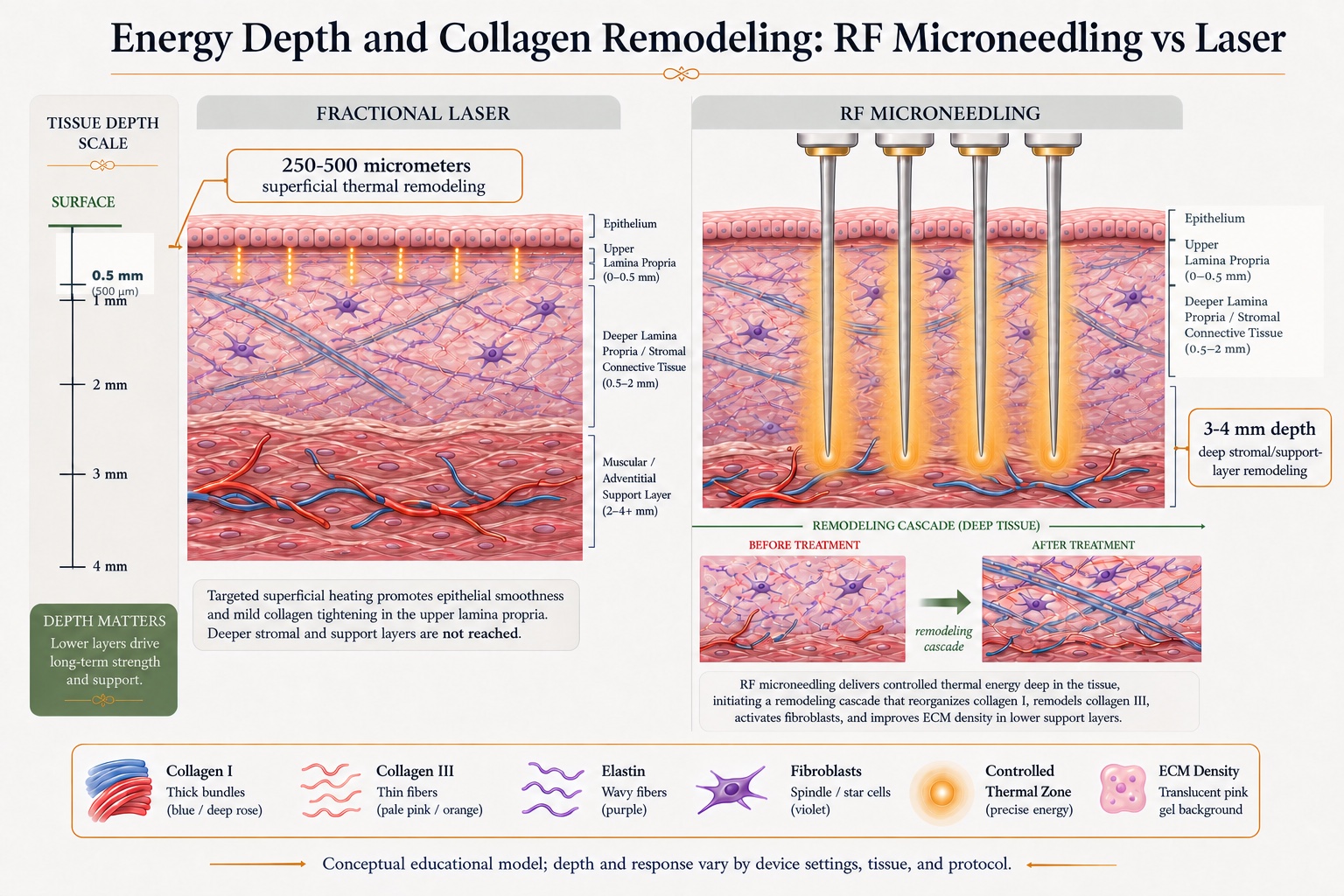
Fractional laser creates controlled treatment zones, usually in more superficial tissue layers. The goal is to improve surface tissue quality, flexibility, blood flow, and collagen remodeling. Recovery and results depend on the laser, settings, and condition of the skin.
Morpheus8V uses fine pins to place radiofrequency energy at selected depths. A potential advantage is that it can penetrate deeper into the layers of the skin, where healthier tissue may remain. The controlled injury starts a healing response involving blood vessels, fibroblasts, and collagen.
Platelet-rich plasma is prepared from your own blood and contains a mixture of healing signals. PDGF is one signaling protein and may also be supplied as a manufactured product. Early research and providers are optimistic about the benefit for lichen sclerosus, although results vary and larger studies are needed.
Exosome products are used in dermatology and plastic surgery as add-ons intended to support skin repair, appearance, and longevity. Some providers prefer them because they may cause less inflammation than the broader mixture of platelet-derived growth factors found in PRP. Products vary in source, contents, purity, and testing.
Stem-cell approaches remain investigational for lichen sclerosus. They are not routine treatment. Any discussion should clearly address the source, evidence, oversight, risks, and alternatives.
Adhesions are often managed surgically. Many can be repaired in the office under local anesthesia; more severe cases may require an outpatient surgical setting. Surgery helps the structural problem but does not cure the underlying inflammation, so ongoing medical treatment and follow-up remain important.
Call 980-771-0726 for increasing pain, redness, swelling, drainage, fever, trouble urinating, heavy bleeding, worsening sores, or symptoms that do not settle as expected after treatment.
Seek urgent care for severe pain, rapidly spreading swelling or redness, inability to urinate, uncontrolled bleeding, fainting, trouble breathing, or signs of a serious allergic reaction.
Do not stop prescribed lichen-sclerosus medication unless Dr. Stepp changes your plan.
No. Lichen sclerosus is a long-term inflammatory skin condition and is not contagious.
A strong prescription topical corticosteroid ointment used on the prescribed treatment and maintenance schedule is the best-supported treatment. Skin protection and regular vulvar examinations remain important even when symptoms improve.
No. Laser and radiofrequency microneedling are optional add-on treatments. They do not replace prescribed steroid care or regular vulvar examinations.
Clitoral or labial adhesions are often managed surgically. Many can be repaired in the office under local anesthesia, while more severe cases may require an outpatient surgical setting. Surgery helps the structural problem but does not cure the underlying inflammation.
Yes. Some people have few symptoms even when skin inflammation is active, which is why regular vulvar examinations and ongoing treatment remain important.
Kevin Stepp, MD, FACOG, URPS evaluates and treats vulvar lichen sclerosus at Advanced Pelvic Surgery and Urogynecology of Charlotte, 11210 Golf Links Dr North, #100, Charlotte, NC 28277.
Consultation includes a careful vulvar examination, review of current treatment, and discussion of medical, procedural, and surgical options appropriate for your findings.
Schedule a Consultation